

The era of “Google Zero”
In May 2024, Google began showing AI Overviews in Search: instead of a list of links, users get an AI summary at the top of the page. Google CEO Sundar Pichai discussed the change in an interview with The Verge, whose editor-in-chief Nilay Patel coined theterm “Google Zero” – the idea that the traffic Google sends to websites could one day fall close to zero. For publishers who rely on Google for readers, it was a shock, and brands worried too.
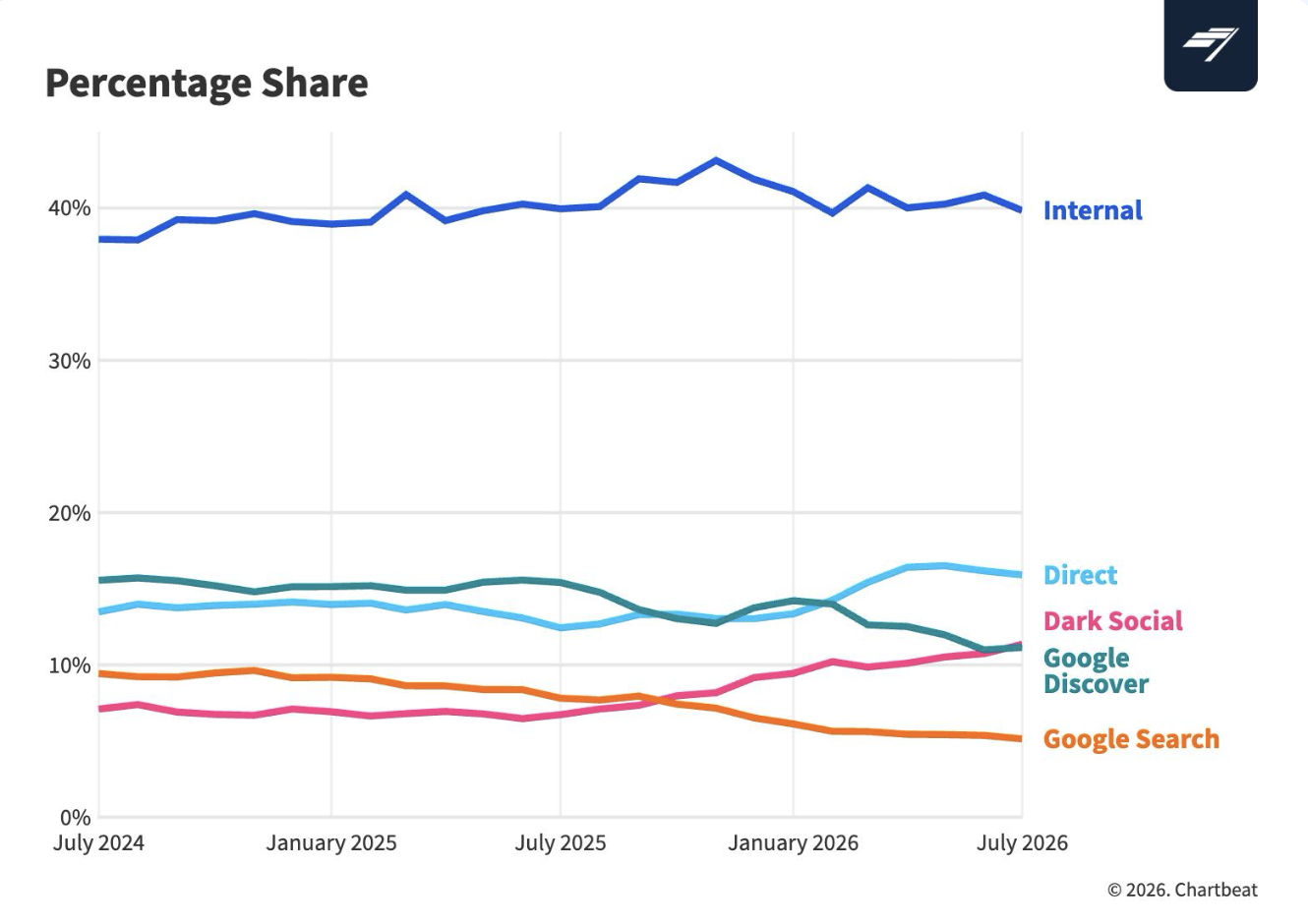
These concerns have a real basis, but the numbers need context. According to Chartbeat, which tracks thousands of news websites, Google Search traffic to news sites fell by about 40% in a single year. Yet across those sites, search made up only about 9% of traffic, falling to 5%, so for the industry as a whole the impact was smaller than the headline figure suggests.
Africa’s different path
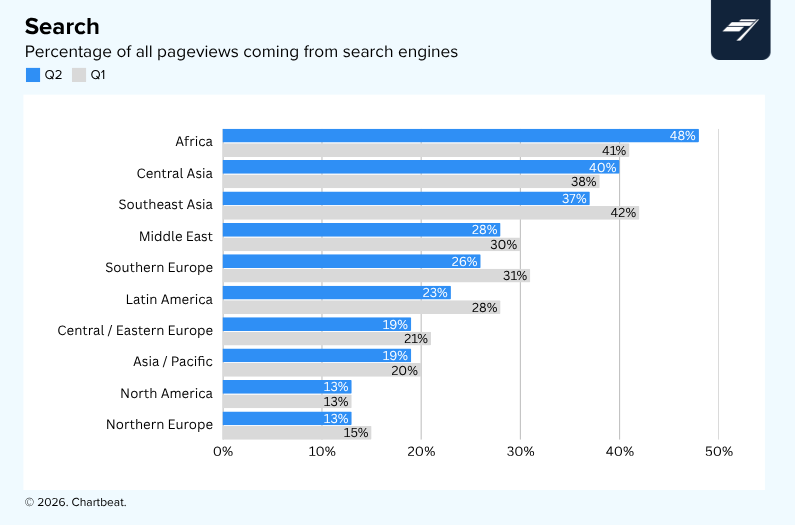
In Africa, the trend looks different. Chartbeat’s regional data shows that search traffic to African publishers grew faster than anywhere else in 2026, from 41% to 48% of all pageviews between the first and second quarter.
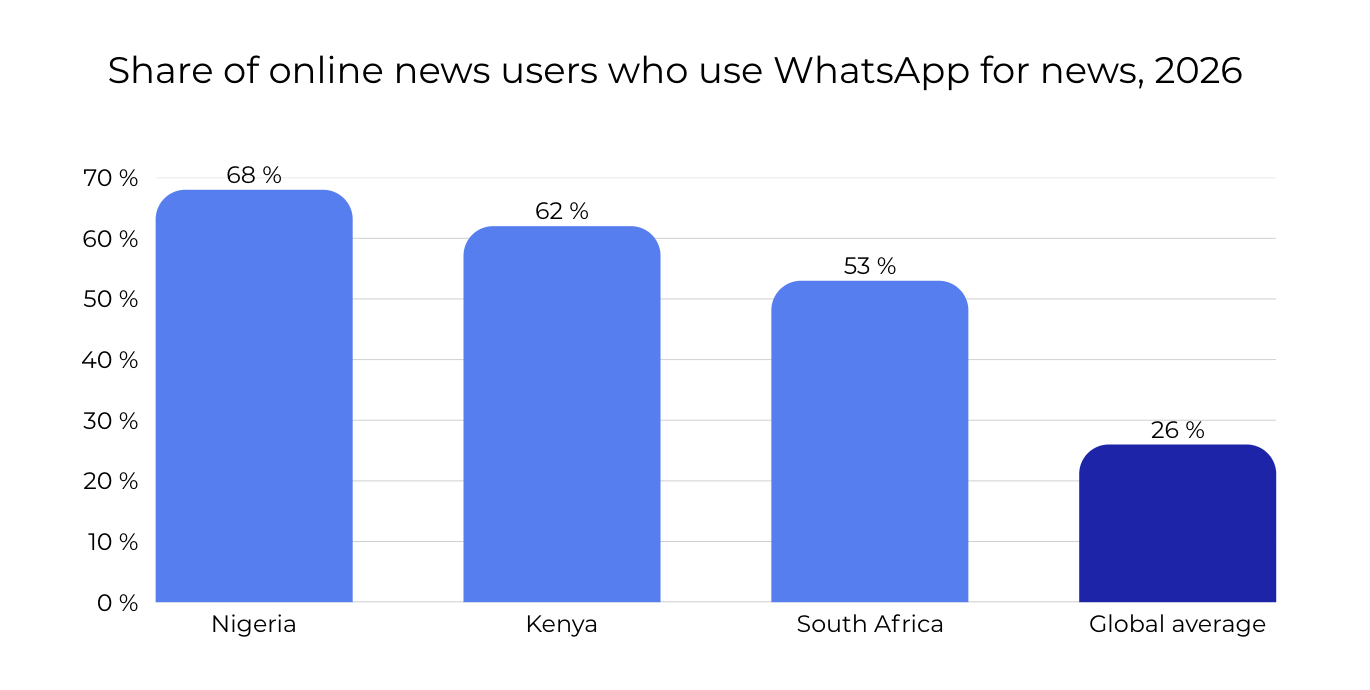
Why is Africa different? Nobody knows for sure yet, but African audiences have built their own habits for finding content. In Nigeria, Kenya and South Africa, more than half of online news users surveyed by the Reuters Institute (2026) use WhatsApp for news, two to three times the global average. From our work with local publishers, we see the same pattern on the ground: news discovery and consumption rely heavily on channels other than Google search.
The Google Zero effect is likely to reach African publishers eventually, but it will probably affect them less than publishers elsewhere.
Meanwhile, a different change is already happening on their sites.
Two kinds of visitors
When Google or ChatGPT answers a question with an AI summary, that answer has to come from somewhere. AI tools don’t create information on their own. They send automated programs, often called bots or crawlers, to visit websites, read the content and bring it back to build their answers. Some AI tools now also browse websites on behalf of a user, for example to compare prices or check the news. This machine activity is what the industry calls “agentic traffic.”
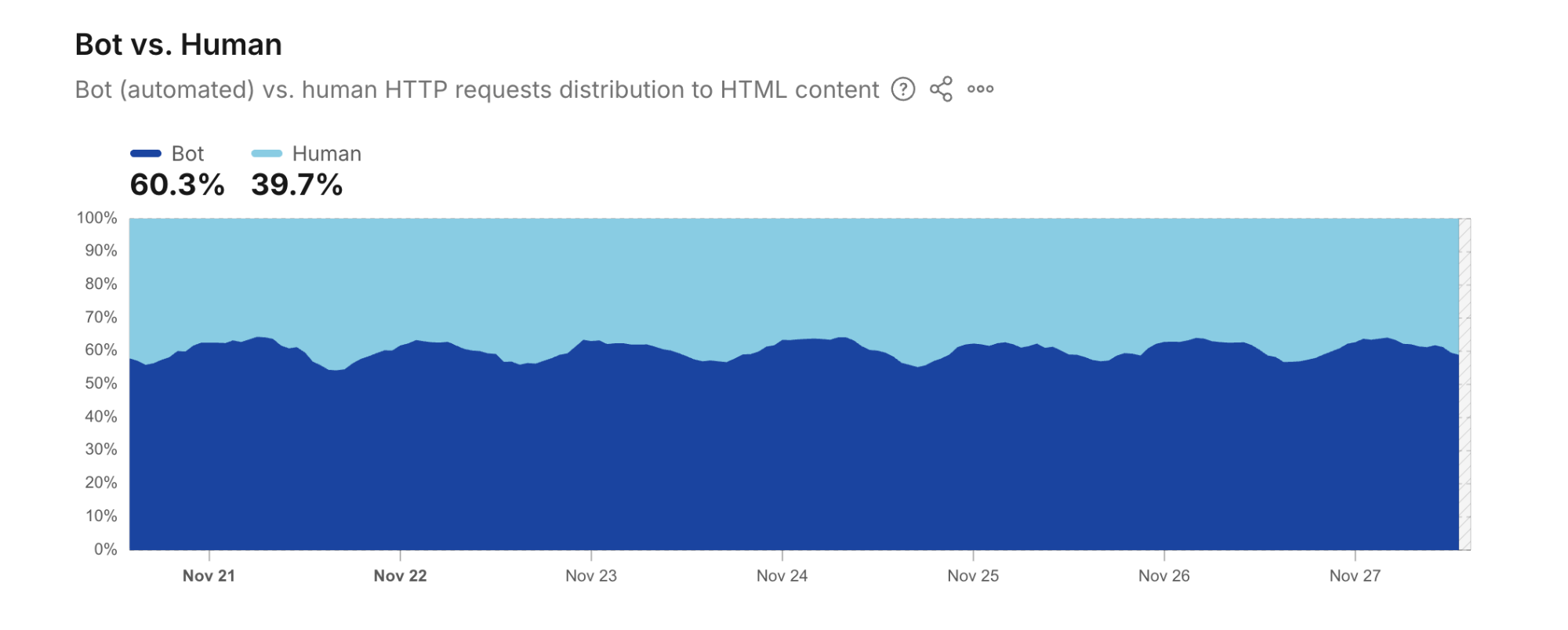
Few website owners realise how big it has become. In June 2026, Cloudflare, which handles traffic for about a fifth of the world’s websites, reported that machine visits had overtaken human ones for the first time, making up about 57% of web traffic. By late November 2026, that share had risen to around 60%. Not all of these machines are AI bots, since search engines and other automated tools count too, but AI is the fastest-growing part.
In Africa, the share is lower but still significant. Cloudflare’s data for Africa shows that about a third of web traffic in late November 2026 was automated. This matches what we see on the ground. We analysed data from a sample of West and Central African news websites and found that, on average, about a third of the traffic behaved like machines. It varies a lot from one publisher to another, from around 6% on some sites to more than half on others.
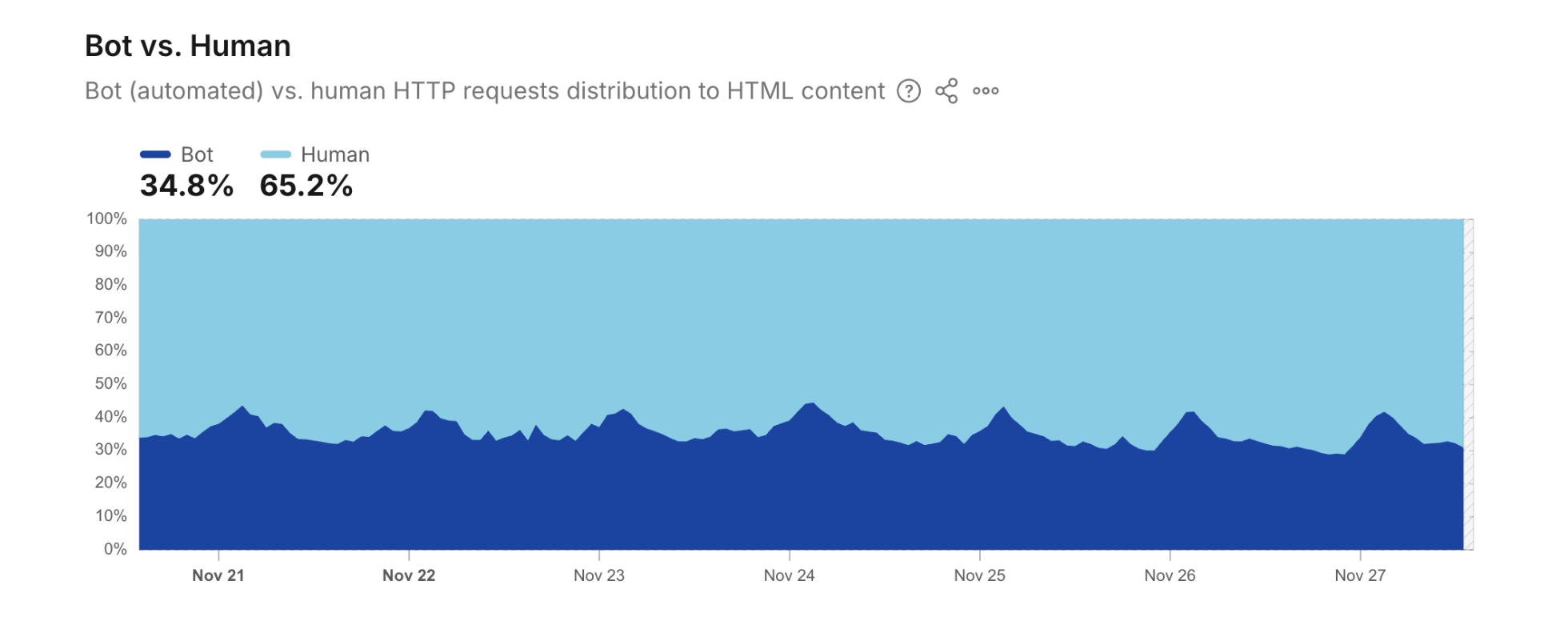
So every website now serves two very different audiences. People read, click and respond to ads. Machines collect content and leave. Treating them as one audience no longer makes sense, and each needs its own approach. Let’s start with the machines.
Machines: making AI pay for content
Creating content costs money: journalists, editors, research, time. AI companies send bots to websites for two reasons: to collect content that trains their models, and to read pages live to answer people’s questions. Either way, they use the content to build their products, mostly without paying for it. In late November 2026, about 44% of AI bot visits to websites were for training and around 10% for answering questions, according to Cloudflare Radar. Almost half came from bots that do both.
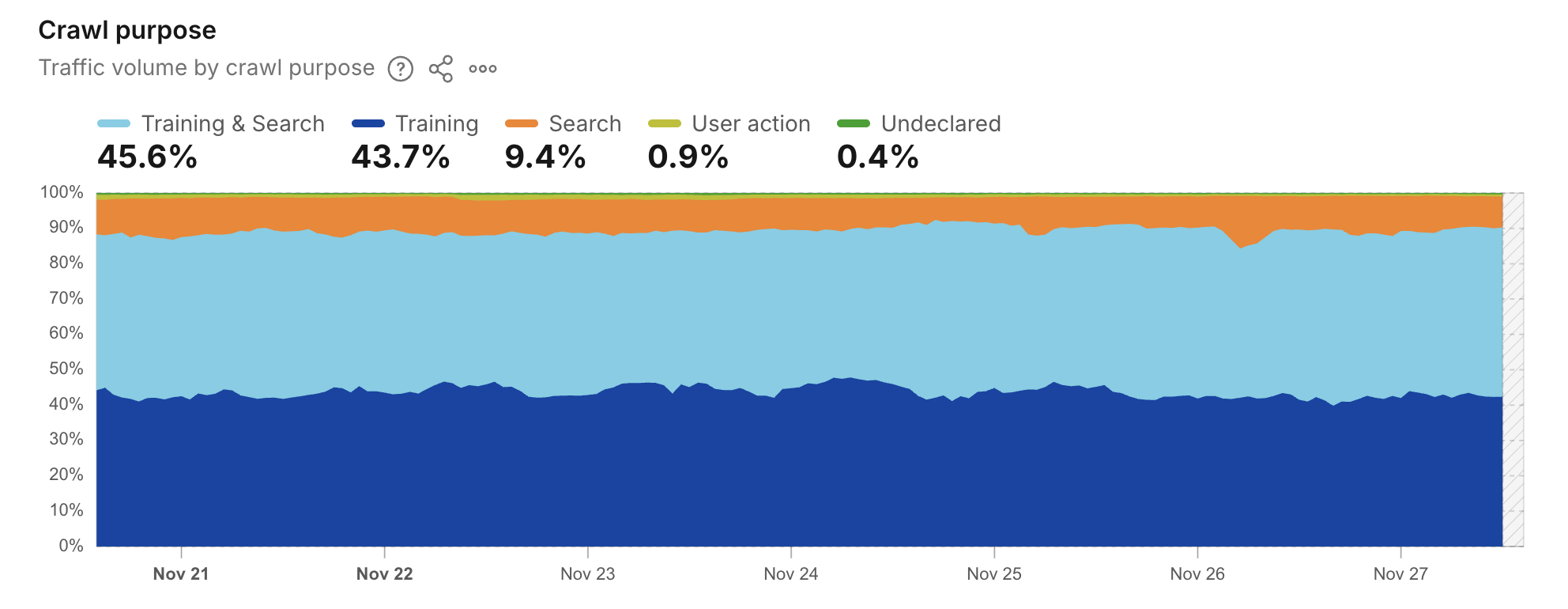
Publishers can block the bots that only collect content for training while still letting in the ones that answer questions. That stops some of the free use and gives AI companies a reason to negotiate. But it’s not a complete fix: bots that do both jobs are a large share, some bots don’t identify themselves, and blocking AI entirely would backfire. If reliable publishers shut AI out, AI tools will answer with whatever else they can find, and the information people rely on gets worse. Staying visible in AI answers has become a discipline of its own, which we explored in From SEO to GEO: How Generative Engines Are Rewriting the Rules of Visibility.
The real challenge is making AI companies pay for the content they use, and there are two routes. For training, some large publishers have signed licensing deals, where AI companies pay for the right to use their content. For bots that read pages to answer questions, publishers are testing ongoing payments: paying per page read, per use in an answer, or through a subscription to the publisher’s content. These are still early experiments, far from African publishers, but the direction is set: content has value, and its use should be paid for.
People: from pageviews to attention
On the human side, the problem is even bigger. When AI gives the answer directly, people have fewer reasons to visit the original source. A Pew Research Center study found that when Google showed an AI summary, people clicked on a link to a website about half as often, and almost never clicked on the sources inside the summary itself. Yet the whole publishing industry earns its money from people arriving on the page: ads, sponsored content and subscriptions all depend on it. As AI answers start to replace human visits, the way publishers earn money has to change.

That change starts with what is being sold. The pageview, long the industry’s currency, is losing its value, while the human reader behind it is gaining it. A person reading a page is becoming scarcer, and therefore more valuable. Advertisers need to understand this too: prices for reaching engaged readers will rise, and they should.
In Africa, many publishers are already looking for ways to get more value from their audiences. What’s still missing is the structure to do it: tools to separate traffic by quality and ways to package and sell it as premium. Building it is a job for the whole market, not publishers alone, and some of it is already starting to appear. Curated inventory, which brings selected quality sites together for advertisers, is a first step. Going further means working directly with publishers, site by site: knowing who is actually reading, and selling specific placements at a premium. That’s the approach behind the Africa Premium Network.
Preparing for the change
The change won’t happen overnight, but it has already started, and African publishers have a rare advantage: time. Google Zero has so far affected them less than publishers elsewhere, which leaves room to prepare before the shift fully arrives.
The first step is to understand their own traffic: how much of it is human, which machines visit and why. The second is to decide how to treat those machines, staying open to the AI tools that answer questions while protecting content from free use for training. The third is to invest in the human audience: fewer, better-placed ads, a cleaner reading experience, and direct relationships with readers through channels their readers already use.
None of this needs to be done alone. Publishers, technology partners and advertisers will have to build this new market together. Those who start now will be the ones ready when real human attention becomes the industry’s most valuable currency.
Key takeaways
As AI answers spread, Google Search traffic to news sites fell by about 40% in a year, but search was only around 9% of their traffic, so the overall impact was smaller than the headline suggests.
Africa is following a different path: search traffic to African publishers grew in 2026, and news discovery there relies heavily on channels other than Google.
According to Cloudflare, machines now make up around 60% of web traffic, and on a sample of West and Central African news sites, about a third of traffic behaved like machines.
Publishers face two separate problems: AI companies use their content mostly without paying, and AI answers give people fewer reasons to visit.
Blocking AI is not a full solution. The way forward is getting paid for content use and valuing human attention above raw pageviews.
African publishers have time to prepare: understand their traffic, decide how to treat AI bots, and invest in their human audience.
FAQ
What is “Google Zero”?
“Google Zero” is a term coined by The Verge’s editor-in-chief Nilay Patel for the idea that the traffic Google sends to websites could one day fall close to zero, as AI summaries answer questions directly on the search page.
What is agentic traffic?
Agentic traffic is website activity created by AI tools rather than people: bots that collect content to train AI models, bots that read pages live to answer questions, and AI agents that browse websites on behalf of users.
How much web traffic comes from bots?
According to Cloudflare Radar, machine visits overtook human ones in June 2026, at about 57% of web traffic, rising to around 60% by late November 2026. Not all of these are AI bots, but AI is the fastest-growing part.
Is Google Zero affecting African publishers?
Less than elsewhere, so far. Chartbeat data shows that search traffic to African publishers grew in 2026, from 41% to 48% of pageviews between the first and second quarter, and news discovery in Africa relies heavily on channels other than Google.
Should publishers block AI bots?
Publishers can block bots that only collect content for training while letting in those that answer questions. This limits free use of content, but it is not a complete fix, since many bots do both jobs. Blocking AI entirely would make reliable content invisible in AI answers.
How can publishers get paid for AI use of their content?
For training, some large publishers have signed licensing deals with AI companies. For bots that answer questions, publishers are testing payments per page read, per use in an answer, or through content subscriptions. These models are still early experiments.
Why is human attention becoming more valuable?
As machines generate a growing share of pageviews and AI answers reduce visits, a real person reading a page becomes scarcer. Advertising value is shifting from the number of pageviews to the number of real, engaged readers behind them.
Sources:
The Verge, “Google CEO Sundar Pichai on AI-powered search and the future of the web”, May 20, 2024
Chartbeat, “Global audience insights from the second quarter of 2026”, 2026
Reuters Institute, “Digital News Report 2026”, June 2026
Cloudflare Radar, “Bot vs. Human” traffic data, November 2026
Cloudflare Radar, “AI Insights: crawl purpose”, November 2026